

How Service Dogs Are Trained for Airports, Restaurants, and Crowded Places
A busy airport terminal. A packed restaurant. A crowded shopping center filled with people, noises, and movement.
These environments can be overwhelming for anyone. Yet service dogs navigate them every day with confidence and focus, helping people accomplish major life activities and move through the world more independently.
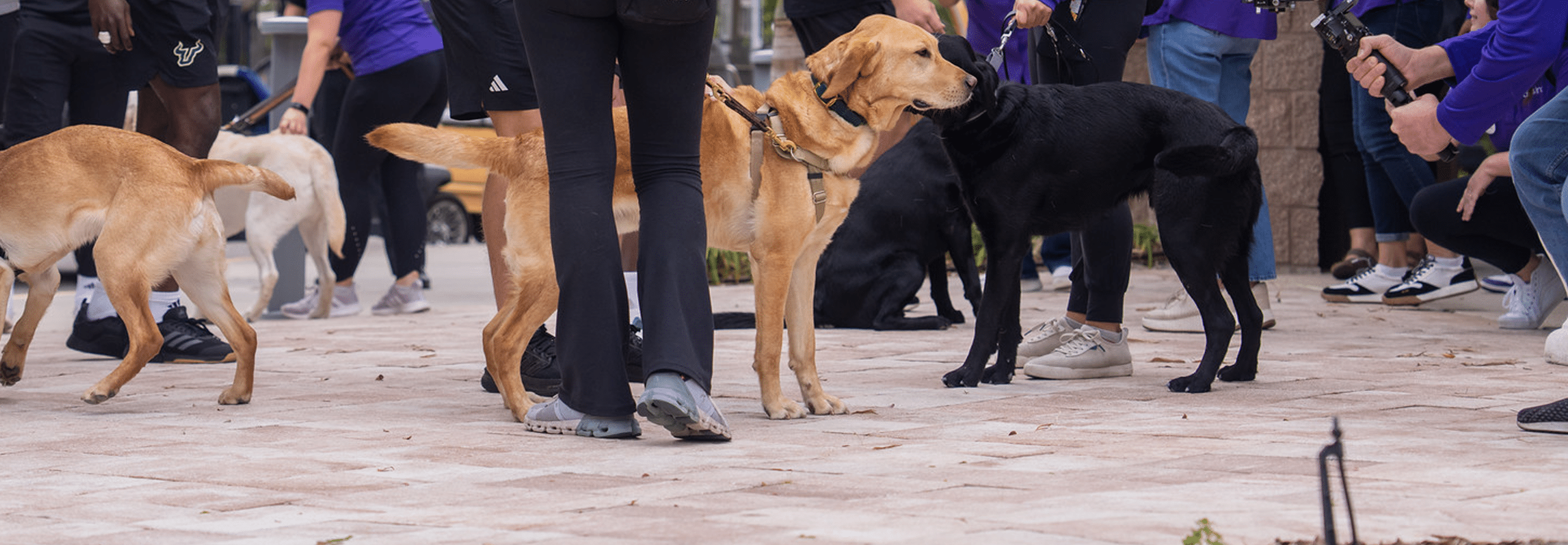
The calm behavior people see from a service dog in public is the result of extensive service dog training, thoughtful socialization, and countless hours of practice. Through service dog public access training, these highly trained canine companions learn to remain calm, ignore distractions, and perform tasks in a wide variety of public settings.
What Is Public Access Training?
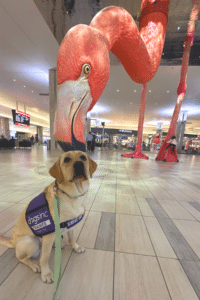 Public access training prepares service dogs to accompany a person with a disability in everyday environments.
While task training teaches a dog specific skills related to a person’s disability, public access training focuses on behavior. Dogs learn how to navigate airports, restaurants, stores, healthcare facilities, and other public accommodations while remaining calm and focused.
Under ADA requirements, a service animal must be individually trained to perform tasks that assist a person with a disability. This distinction is important because a dog’s mere presence does not qualify a dog as a service animal.
Unlike emotional support animals, whose benefits may come primarily from companionship, service dogs are trained to perform specific tasks that directly assist individuals with disabilities in daily life.
These skills help prepare service dog candidates for the responsibilities they’ll encounter as working dogs.
Why Airports, Restaurants, and Crowded Places Are Challenging
Some of the most valuable training environments are also some of the busiest.
Airports
Service dog airport training exposes dogs to rolling luggage, security checkpoints, overhead announcements, moving walkways, crowds, and air travel. Dogs learn that these sights and sounds are simply part of the environment.
Whether navigating a terminal or waiting at a gate, a service dog must remain focused despite constant activity.
Restaurants
Service dog restaurant training presents a different challenge.
Restaurants are filled with food smells, dropped crumbs, tight spaces, and unfamiliar people. Dogs learn how to settle quietly under a table, avoid distractions, and remain composed around tempting food.
Crowded Public Spaces
Shopping centers, festivals, sporting events, and other public settings provide opportunities for service dog crowd training.
Dogs encounter children, shopping carts, loud noises, other animals, and unexpected situations. Learning to stay calm in these environments helps prepare them for the realities of service work.
How Service Dogs Learn to Ignore Distractions
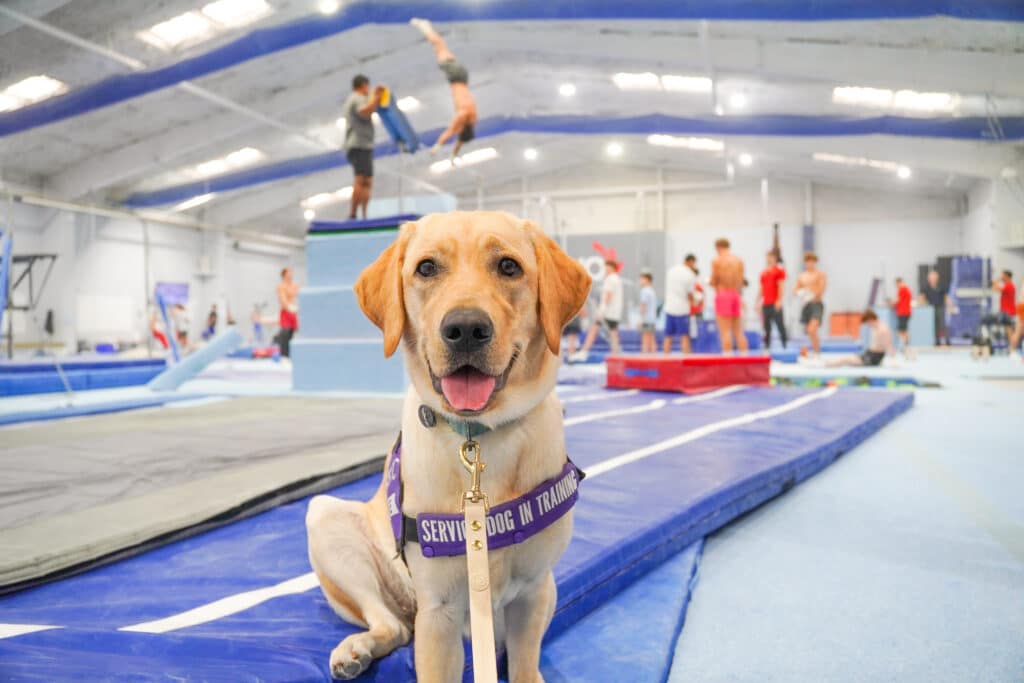 One of the defining characteristics of a successful service dog is the ability to ignore distractions.
Service dog distraction training begins gradually. instructors introduce dogs to different environments and reward them for maintaining focus. Over time, distractions become more challenging.
Dogs learn to remain calm around food, crowds, loud noises, other dogs, and unfamiliar people. They practice maintaining focus even when something exciting or unexpected happens nearby.
This process helps develop impulse control and reliability. Whether a child drops a snack, another dog walks past, or a loud announcement echoes through an airport, the goal is for the dog to remain attentive to its work.
These skills are essential for long-term success as a working service dog.
Building Confidence Through Exposure and Socialization
Confidence is just as important as obedience.
Future service dogs begin building confidence long before advanced training starts. As a puppy grows, carefully planned socialization introduces new sights, sounds, surfaces, and experiences.
Many service dogs in training visit stores, parks, office buildings, outdoor shopping areas, and other locations appropriate for their developmental stage. Exposure to different locations helps dogs become comfortable in unfamiliar environments.
Breeds commonly used for service work, including Labrador Retrievers and Golden Retrievers, benefit from positive experiences that help build resilience and adaptability.
Rather than forcing dogs through challenging situations, instructors use positive reinforcement to help create successful experiences. This approach encourages curiosity, confidence, and a willingness to engage with the world.
Teaching Calm Behavior in Busy Environments
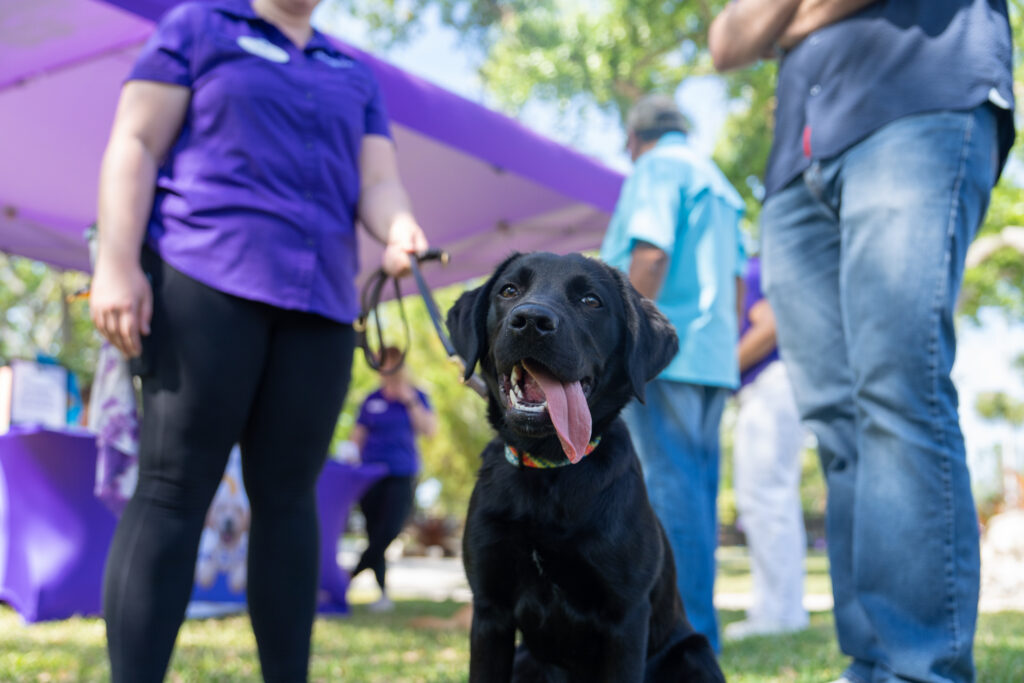 Calm behavior is one of the most important service dog skills.
In many situations, a service dog’s job is simply to wait patiently while remaining ready to assist. Dogs may spend extended periods resting beneath restaurant tables, sitting quietly in waiting rooms, or accompanying someone through a busy airport.
Learning how to settle comfortably helps support both safety and effective performance.
A calm dog is better able to respond when needed, whether that means retrieving items, providing mobility assistance, opening doors, or performing other trained tasks.
For some individuals, service dogs may provide support related to post-traumatic stress disorder. A PTSD service dog may be trained to interrupt anxiety attacks, respond to panic attacks, or provide deep pressure therapy during stressful situations.
These tasks require a dog that can remain focused even when the environment is busy.
Why Real-World Practice Matters
Training cannot happen exclusively in a classroom setting.
Dogs must learn how to apply their skills in real-world situations. That’s why public access training for service dogs includes visits to actual airports, restaurants, stores, commercial facilities, and community spaces.
Experience helps dogs generalize their training across different locations.
instructors gradually increase the level of difficulty as dogs gain confidence. A dog that successfully navigates a quiet store today may eventually work comfortably in a crowded airport tomorrow.
This progression helps prepare future service dogs for the variety of environments they’ll encounter throughout their working lives.
How instructors Evaluate Public Access Skills
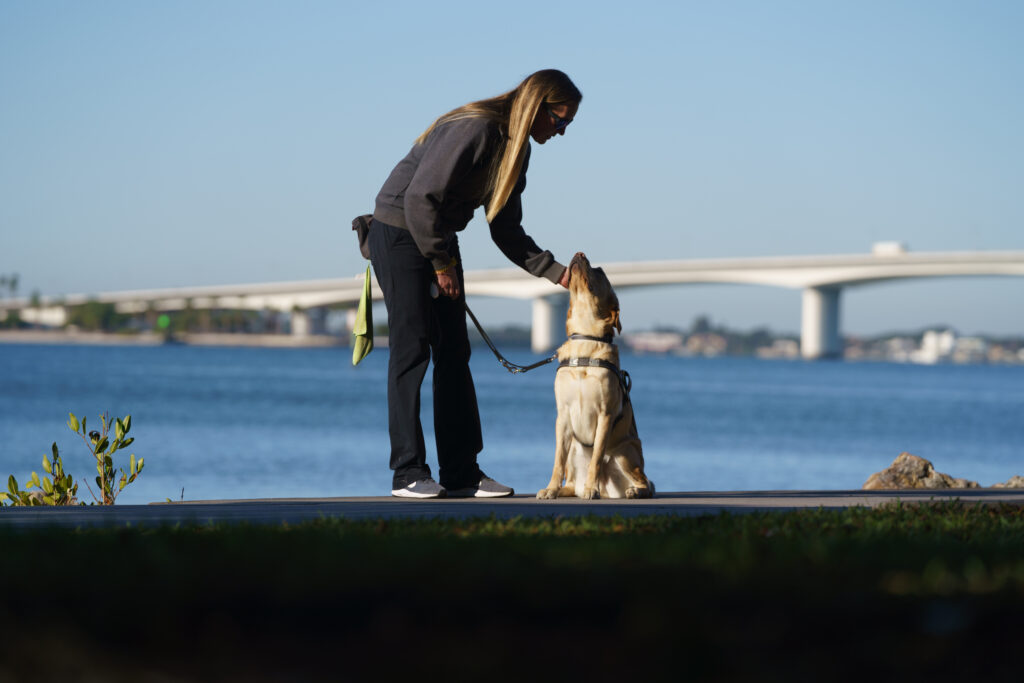
Before entering working life, service dogs undergo extensive evaluations.
instructors assess focus, confidence, reliability, and public behavior across a variety of settings. Dogs must demonstrate that they can remain calm, respond appropriately to cues, and navigate public accommodations safely.
Evaluations also help determine whether a dog is ready for additional training or prepared to move into a working partnership.
Consistency matters. A successful service dog must demonstrate the same reliable behavior regardless of the environment.
The Role of Puppy Raisers in Public Access Preparation
Long before advanced service dog training begins, puppy raisers help lay the foundation.
Through early obedience training and socialization, puppy raisers introduce future service dogs to everyday life. Trips to stores, parks, outdoor events, and community spaces provide valuable learning opportunities.
These experiences help prepare dogs for future public access work while building confidence and adaptability.
Puppy raisers also help dogs develop the skills needed for advanced training later on. Their efforts play a critical role in future service dog development and ultimately contribute to transforming lives.
Preparing Dogs for a Life of Service
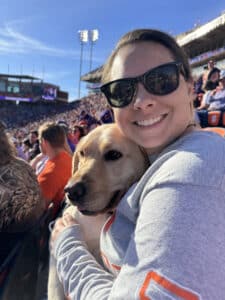 The confidence people see in service dogs isn’t accidental.
It’s the result of a thoughtful training process that combines socialization, public access training, task training, exposure to real-world environments, and positive reinforcement.
From learning to ignore distractions in crowded places to mastering specialized tasks such as retrieving items, mobility assistance, deep pressure therapy, or guiding someone safely through public spaces, every lesson helps prepare dogs for a meaningful future.
The result is more than a highly trained dog. It’s a strong bond between a person and a canine companion—a partnership built on trust, reliability, and service.
Interested in learning more about how Dogs Inc prepares future service dogs for public life? Explore our programs at Dogsinc.org and discover how you can help support the next generation of life-changing service dog teams.
