

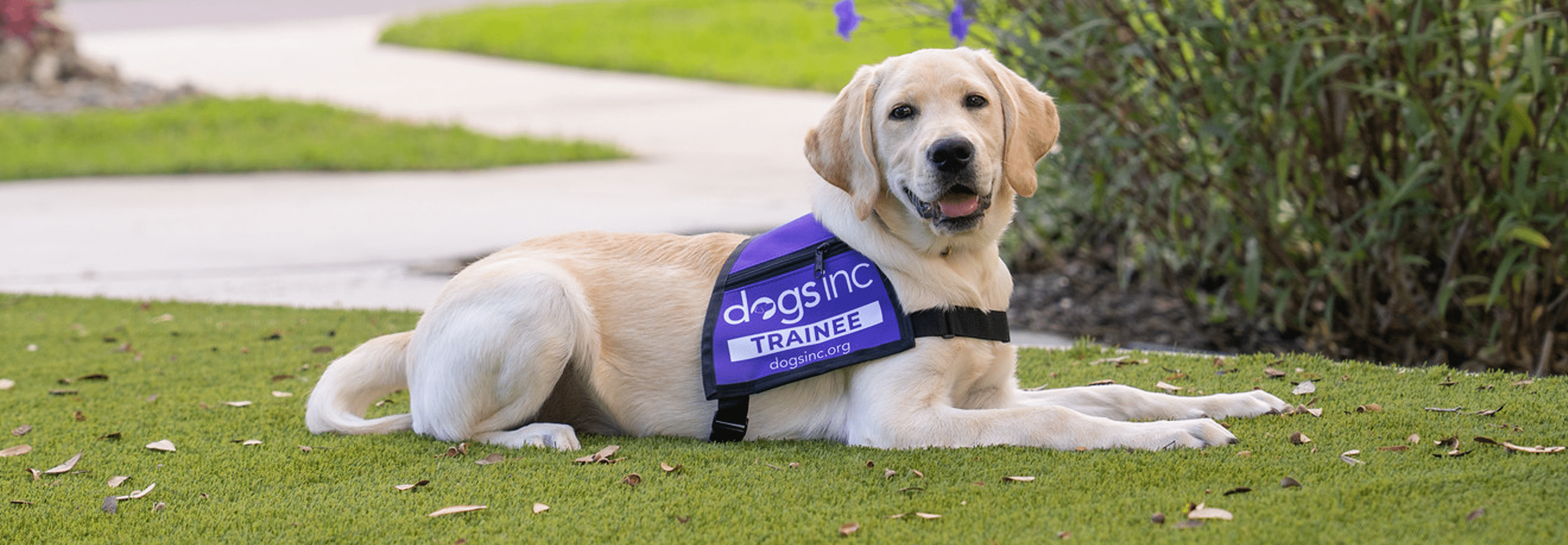
Puppy Raiser FAQs: Top 5 Questions About Raising Future Service Dogs
Volunteer puppy raisers play an essential role in preparing future working dogs for life-changing partnerships. Through a structured puppy raising program, these volunteers welcome a puppy into their loving home and daily routine—supporting early socialization, basic obedience, and the puppy’s development during its first year.
Whether attending puppy classes, visiting new environments, or simply practicing good house manners at home, volunteers help each pup build the confidence and basic skills needed before formal training begins.
While out in public, these pups often spark curiosity. Here are the top puppy raiser FAQs—based on what our volunteer puppy raisers hear most often.
1. How do you give up the puppy after raising it?
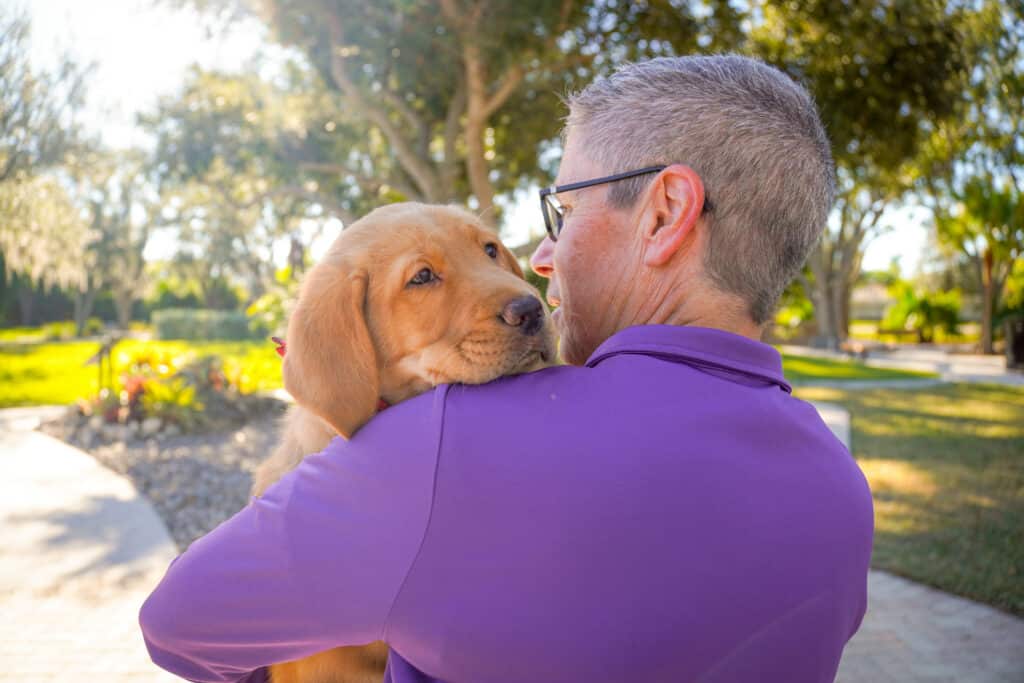
While our puppy raising program offers flexible options of raising a pup for three, six, or 12 months—it can always be emotional when saying goodbye. But puppy raisers stay focused on the mission: preparing future working dogs for the person who will rely on them.
Many volunteers remind themselves: We may love the puppy, but someone else needs them.
Through volunteer puppy raising, each pup grows into a candidate for advanced training. Many puppy raising volunteers continue the journey by choosing to raise another puppy—helping support the next generation of working dogs.
For families and individuals alike, the experience of helping raise puppies is deeply rewarding and truly transformative.
2. How do you teach a puppy to go to the bathroom on command?
Basic training begins within the first few weeks.
Volunteer puppy raisers introduce routines that support the puppy’s development and future obedience training. One early lesson is teaching the cue “Busy!”
Puppy raisers:
- Take the pup outside frequently
- Keep the puppy on leash
- Use the cue as the puppy begins to go
Positive reinforcement using praise and food helps the pup learn quickly.
Over time, this becomes a reliable habit that supports the transition into formal training and reinforces good house manners.
3. Why is your puppy so well-behaved in public?

Strong public behavior begins with early socialization and consistent training.
Volunteer puppy raisers expose pups to:
- New environments
- Different sounds
- New people
Attending classes and working alongside fellow puppy raisers helps reinforce:
- Basic obedience
- House manners
- Calm behavior
Simple reminders like “four on the floor” or “no love from above” help puppies learn not to jump for attention.
Through ongoing support from the puppy raising program and fellow volunteers, each pup gains confidence in real-world situations—an important step before advanced training sessions.
4. Why use specific breeds instead of rescue dogs?
Working dogs require a unique combination of temperament, trainability, and health.
Programs like Dogs Inc work with Labradors because they consistently demonstrate:
- Strong connection to people
- Motivation for food-based training
- Ability to learn basic skills
- Reliable health
Ongoing veterinary care also supports each puppy’s development from early raising through formal training.
5. How can I get involved in puppy raising?
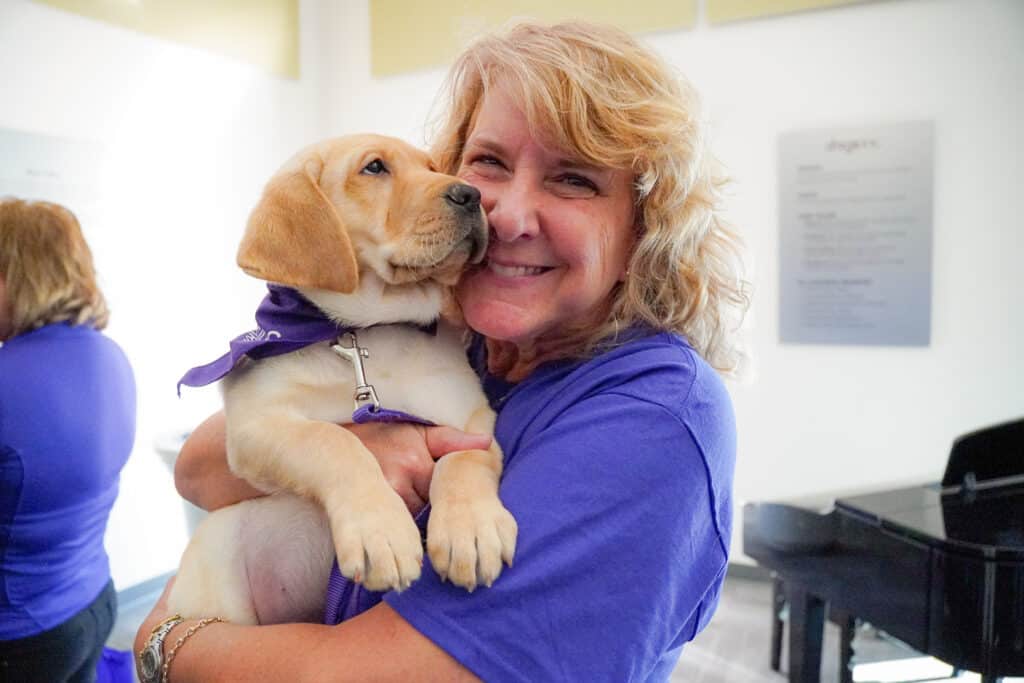
You don’t need prior experience to become a puppy raiser.
Volunteer puppy raising requires:
- A loving home
- Time commitment
- Willingness to learn
Support is provided every step of the way—from the application and phone interview to attending classes and working with experienced raisers.
Puppy raising volunteers help prepare future service dogs for a life of partnership—supporting someone’s path to greater independence.
You Might Also Be Interested In:
Five Reasons to Become a Volunteer Puppy Raiser
