


Why Microchip Your Dog?
A gate left open.
A storm that sends your dog running.
A moment that turns into panic.
No one plans to lose their dog. But preparation can make all the difference.
Both dogs and cats benefit from microchipping, as it greatly increases the chances of reuniting lost animals with their owners.
A microchip is one of the simplest, most effective ways to protect your pet. Implanted just beneath the skin between the shoulder blades, a microchip provides permanent identification that can be scanned in the case of a lost or even stolen dog. Unlike a collar or tag—which can be lost or removed—a microchip is a tamper-proof, permanent solution for pet identification. Microchips significantly increase the number of pets that are reunited with their owners. It’s a small step that offers lifelong security.

What Is a Dog Microchip?
A microchip is a tiny implant, about the size of a grain of rice. It is inserted under your pet’s skin using a needle, similar to a vaccination. Each microchip contains a unique, permanent ID number that can be scanned through the dog’s skin to identify your pet and link to your contact information. The procedure is quick, minimally invasive, and most dogs tolerate it easily.
Microchipping is a painless procedure that takes only seconds to complete.
Millions of microchips are implanted each year. The process is widely considered safe and effective, with minimal risk. Some dogs, especially those with thinner skin, may have a chip that can be felt under the skin, but it does not cause discomfort.
Costs typically range from:
- $15 to $50 for the microchip
- $25 to $70 for implantation
Almost any veterinary facility, as well as most humane societies, animal shelters, and ASPCA locations, can microchip your dog.
Microchips last for the duration of a dog’s lifetime and do not require batteries.
How Microchip Technology Works
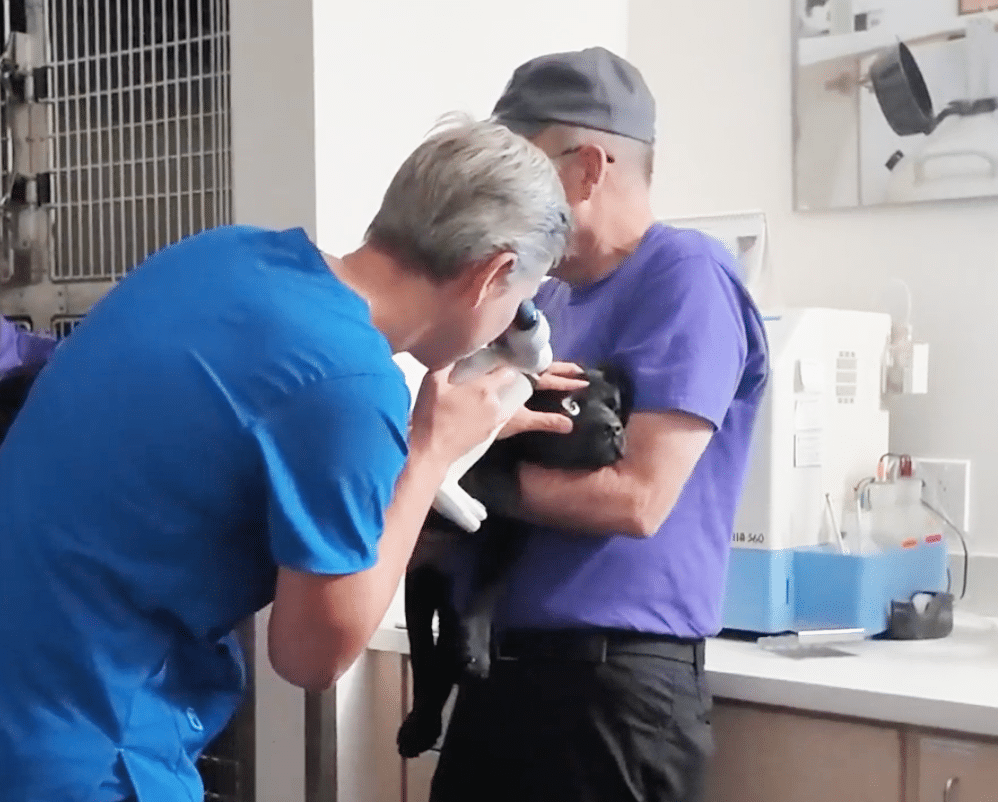
Pet microchipping uses radio frequency identification (RFID) technology. When a scanner passes over the area, it emits an electrical field that activates the microchip and reads a unique identification number.
Important things to know:
- Microchips do not have GPS tracking capabilities and cannot be used to locate your dog in real time.
- They do not require batteries.
- They are designed to last for your dog’s lifetime.
When scanned, the microchip reveals only the unique ID number. That number is used to retrieve the owner’s contact information from a secure microchip database or registries databases.
Unlike collars or ID tags, a microchip cannot fall off or be removed like a collar or tag. It provides tamper-resistant proof of ownership and permanent identification. Keeping the pet’s information and owner’s information up to date in microchip databases is essential for effective pet recovery.
Microchip Registration Is Essential
A microchip only works if it is registered.
After implantation, you must contact the microchip company to register your dog’s chip in a national pet recovery database with your current contact information. Without registration, the ID number cannot be linked back to you.
If you move or change your phone number, update your details immediately. Keeping up-to-date contact information with your associated microchip company is very important. Be sure to include the date when your contact details are last updated or checked, as this helps ensure the most recent data is available for successful pet recovery. Outdated contact information is one of the most common reasons microchips fail to reunite pets with their families.
Many registries also allow you to store important medical information that can be accessed in an emergency.
Routine veterinary visits can confirm the microchip is functioning properly.
Microchip Lookup and Search Tools
If a lost dog is found, a veterinarian or shelter can scan for a microchip. The scanner retrieves the unique identification number, which can then be searched in national databases to access the owner’s contact information and help reunite a lost pet with its family.
One widely used resource in the U.S. is the American Animal Hospital Association (AAHA) database. This tool helps determine which microchip registry holds the pet’s information, making it easier to contact the owner quickly.
While there is no single universal microchip database in the United States, lookup tools help bridge that gap by directing shelters and veterinarians to the correct registry.
Microchip lookup and search tools are standard practice in many countries, and some nations require microchipping as part of pet travel and import regulations.
Microchip vs. GPS: What’s the Difference?
Microchips and GPS devices serve different purposes.
A GPS tracker can help locate your dog in real time, but it requires batteries and can fall off. A microchip provides permanent identification if your dog is found by someone else.
They are complementary tools, not replacements for one another.
Is Microchipping Safe?
There is no proven causal link between microchips and cancer in dogs. As with any medical procedure, there is a very small risk of minor inflammation at the injection site, but serious complications are rare.
For most pet owners, the benefits far outweigh the risks.
What to Expect During the Procedure
For many pet owners, the idea of dog microchipping can bring up questions about what actually happens when their pup is led away at the vet’s. The good news is that microchipping is a quick, straightforward, and nearly painless process that can be done at your local vet or animal shelter.
When you arrive for your appointment, the veterinarian or trained pack member member will gently lift the loose skin between your dog’s shoulder blades—this is the ideal spot for inserting the microchip because it’s comfortable for your pet and keeps the chip securely in place. Using a special syringe, the vet will insert the chip, which is about the size of a grain of rice, just under your pet’s skin. The process is very similar to a routine vaccination and usually takes only a few seconds.
Once the microchip is implanted, the vet or animal shelter pack member will use a microchip scanner to double check that the chip is working properly.
After the procedure, you’ll receive your dog’s microchip number and instructions on how to register it with one of the recognized microchip registries. It’s essential to enter your current contact details—such as your phone number and address—so that if your dog is ever lost, animal shelters or veterinarians can quickly access your information and identify you as the owner. The American Animal Hospital Association (AAHA) recommends that pet owners regularly double check and update their contact information in the registry to ensure it’s always accurate.
Many humane societies and animal shelters offer microchipping services, making it easy and affordable for pet owners to provide their dogs this service. The benefits of microchipping are clear: it’s a tamper-proof, lifelong way to identify your pet and dramatically increases the chances of being reunited if your dog ever goes missing.
By understanding what to expect during the microchipping procedure and the importance of registration, pet owners can take a simple step that offers lasting peace of mind and security for their beloved dogs.

A Small Chip. A Lifelong Safety Net.
Microchipping is relatively inexpensive. The peace of mind it offers is immeasurable.
Because when the unexpected happens, permanent identification can be the difference between heartbreak and homecoming.
