


Early Neurological Stimulation in Puppies: Why the First Weeks Matter
Introduction
Long before a puppy learns to sit, walk on a leash, or one day guide someone through the world, a lot is already happening behind the scenes.
During those first few weeks of life, puppies are growing and changing in remarkable ways. Though their eyes and ears haven’t opened yet, their brains and nervous systems are hard at work. The experiences they have during this time help lay the groundwork for how they learn and interact with the world around them.
One science-based practice used during this stage is called Early Neurological Stimulation, or ENS. It’s just one small piece of the bigger picture, but it reflects the thoughtful approach that helps support healthy development from the very beginning.
At Dogs Inc, preparing future guide dogs and service dogs starts long before formal training begins.
What Is Early Neurological Stimulation?
 Early Neurological Stimulation, often called ENS, refers to a series of brief, gentle exercises performed during a puppy’s earliest days of life. These exercises are typically introduced during the neonatal stage, which spans from birth through approximately two weeks of age.
The Neonatal Stage
During the first week and beyond, newborn puppies are completely dependent on their mother and litter mates. At this stage, puppies spend most of their time sleeping and nursing. They can’t see or hear yet, and they are unable to regulate their own body temperature. Even though they appear tiny and vulnerable, important changes are taking place as their brains and nervous systems continue to develop.
Gentle Experiences, not Training
ENS isn’t about teaching puppies skills or getting a head start on training. Instead, it offers gentle handling and age-appropriate experiences during a time when puppies are growing and changing rapidly. Because they are so young, the exercises are brief and always performed using established protocols.
Think of ENS as one small chapter in the much bigger story of puppy development.
Why the First Weeks of Life Matter So Much
Developmental Windows
A puppy’s brain develops rapidly during the first weeks of life. Scientists often refer to these periods as developmental windows, times when certain experiences can have a lasting influence on how puppies respond to the world around them later on.
Growing Through Different Puppy Development Stages
Like children, puppies go through different stages, and each puppy development stage brings new opportunities for growth. The adolescent stage can begin as early as 6 months, when puppies may test boundaries much like human teenagers. Most puppies reach reproductive maturity between 6 and 12 months; in female dogs, that often includes the first heat cycle and the broader heat cycle, while male dogs may show new hormone-driven behaviors. The experiences they have early on help shape how they respond to unfamiliar situations and adapt to different environments.
Of course, no single experience determines who a puppy will become. Genetics, health, socialization, environment, and training all play important roles. Early puppy development isn’t about creating perfect dogs. It’s about providing thoughtful experiences that support healthy growth, emotional maturity, and future learning for most dogs.
How Early Neurological Stimulation Works
 ENS exercises are simple, gentle, and designed specifically for very young puppies. The goal is to introduce mild challenges in a safe and controlled way while keeping stress levels low.
Common exercises may include:
- Gentle tactile stimulation.
- Holding the puppy in different positions.
- Brief exposure to varying temperatures using approved methods.
- Introducing different smells.
Each exercise lasts only a few seconds and is performed by trained individuals following established protocols.
The purpose isn’t to overwhelm puppies or speed up training. Instead, these experiences support healthy neurological development during an important stage of growth.
Because puppies are especially delicate during this period, ENS should only be performed by individuals who understand proper procedures and puppy care.
Benefits of Early Neurological Stimulation
For decades, Puppy Parents and working dog organizations have used ENS as part of their puppy-rearing programs. Studies and experience suggest that Early Neurological Stimulation may help support healthy neurological development and prepare puppies to navigate new experiences as they grow.
Potential benefits may include:
- Supporting healthy neurological development.
- Encouraging adaptability.
- Helping puppies respond positively to new experiences.
- Promoting resilience as they encounter different environments.
Still, ENS is only one piece of the puzzle. A puppy’s temperament and future success are influenced by many factors, including genetics, health, socialization, environment, and training.
Early Neurological Stimulation vs. the Socialization Period
 Although they are often mentioned together, ENS and socialization are not the same thing.
ENS takes place during the neonatal stage, when puppies are still completely dependent on their mother and litter mates. The socialization period comes later and is crucial between 3 and 12 weeks of age, starting at an early age when a young puppy begins interacting more actively with people, sounds, surfaces, other puppies, and other dogs.
As puppies grow, they start building positive associations with new experiences. By 12 weeks, puppies should be exposed to various stimuli. Meeting different people, exploring unfamiliar places, and experiencing different environments all help them gain confidence, develop important social skills, and prevent anxiety and aggression in adult dogs.
By around 8 weeks, many of these experiences help lay the groundwork for a friendly, well-adjusted adult dog. Both stages are important, but they serve different purposes and happen at different times. ENS should complement, not replace, proper socialization and environmental enrichment.
How Early Experiences Shape Future Behavior
Learning From Mother and Littermates
Puppies begin learning about their environment long before formal training starts. Time spent with their mother and litter mates plays an important role in early development, helping puppies learn social skills and bite inhibition.
Navigating Milestones
From the moment they are born, every puppy development stage brings new opportunities to experience the world around them. Puppies move through developmental stages at their own pace, and most puppies experience an average of four fear periods as they grow, which is why new experiences should be introduced thoughtfully with positive training.
Positive experiences help puppies build confidence, curiosity, and the ability to adapt to new situations. Negative experiences in early life can lead to aggression later and other behavioral issues. These early lessons, along with positive reinforcement methods, help shape friendly, well-rounded adult dogs that are better prepared to navigate the world around them.
That’s why thoughtful puppy-rearing practices matter. Creating safe, enriching experiences during every stage of development helps puppies continue learning and growing as they prepare for whatever comes next.
Why Early Development Matters for Future Service Dogs
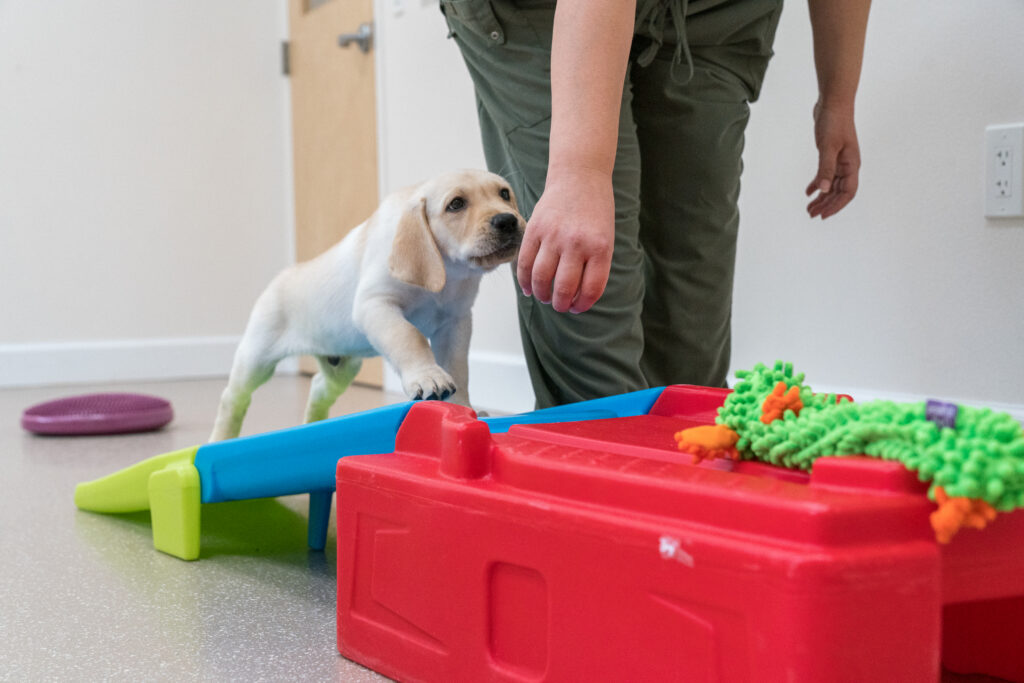 Guide dogs and service dogs need more than advanced skills. They also need the ability to navigate busy environments, adjust to changing situations, and remain calm and focused alongside the people who depend on them.
Those qualities don’t appear overnight.
Strong service dog puppy development begins with a solid foundation. Early experiences help prepare puppies for later socialization, puppy raising, and formal training. Each stage builds on the last, helping puppies develop the skills they’ll need for the important work they may one day do.
That’s why organizations like Dogs Inc invest so much care into every stage of a puppy’s journey, starting from the very beginning.
Development Doesn’t Stop After the Neonatal Stage
The Transitional Stage and Beyond
As puppies grow, so do the opportunities to learn. During the transitional stage, puppies’ eyes and ears open, allowing them to experience more of the world around them. In this transitional period, puppies also begin to walk and bark by 4 weeks old, and their baby teeth start coming in as they move from nursing toward soft food and later solid food.
A Lifetime of Learning
Socialization, enrichment, puppy raising, and continued training all help shape the dogs they’re becoming, and by 3 months old they can begin learning basic cues in short training sessions. Positive reinforcement works best for this early learning. Learning doesn’t stop after puppyhood, and neither does development. Crate training can also support routine and independence. Gentle exposure to new dogs, other animals, and other species helps puppies stay comfortable in a wider world. Puppy classes are beneficial starting around 16 weeks old. Every stage brings something new, helping puppies grow into confident, capable, and well-adjusted companions.
Conclusion
 A puppy’s first weeks may pass quickly, but they mark the beginning of a journey that continues long after those tiny paws start exploring the world.
Early Neurological Stimulation provides gentle experiences during this important stage, but it’s only the beginning. Through puppy raising, socialization, and training, puppies continue to learn and grow with each new experience along the way.
At Dogs Inc, that journey starts from day one. Learn more about how future guide dogs and service dogs are nurtured from the very beginning and follow along as they grow into life-changing partners.
