

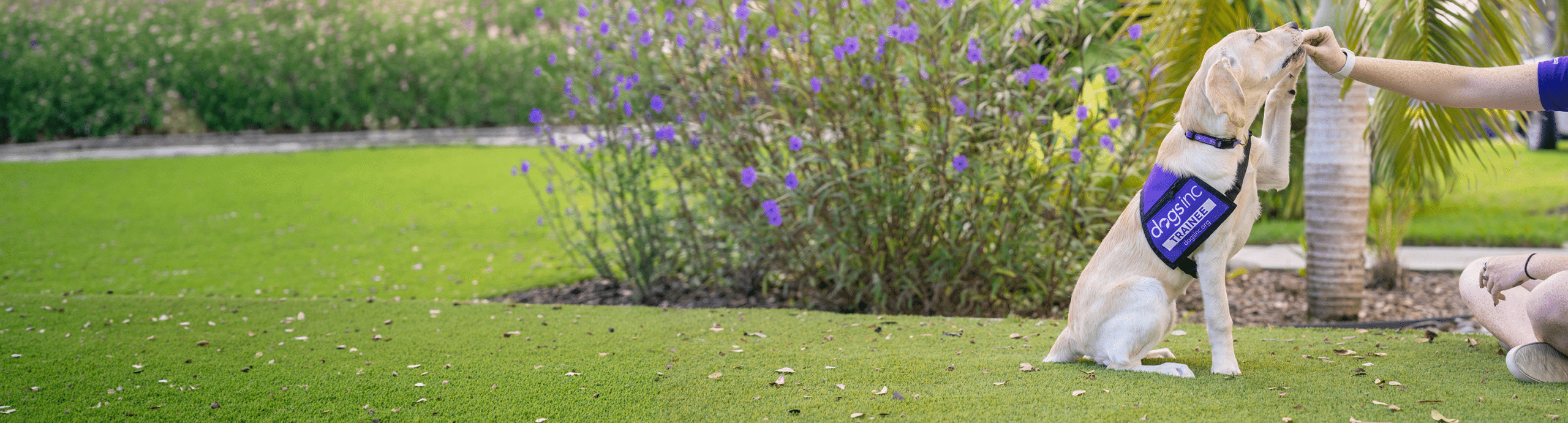
How Do I Use Positive Treat Training for Dogs?
If you’ve ever clipped on a treat pouch and wondered, “Am I going to need this forever? ” Well, here’s some good news.
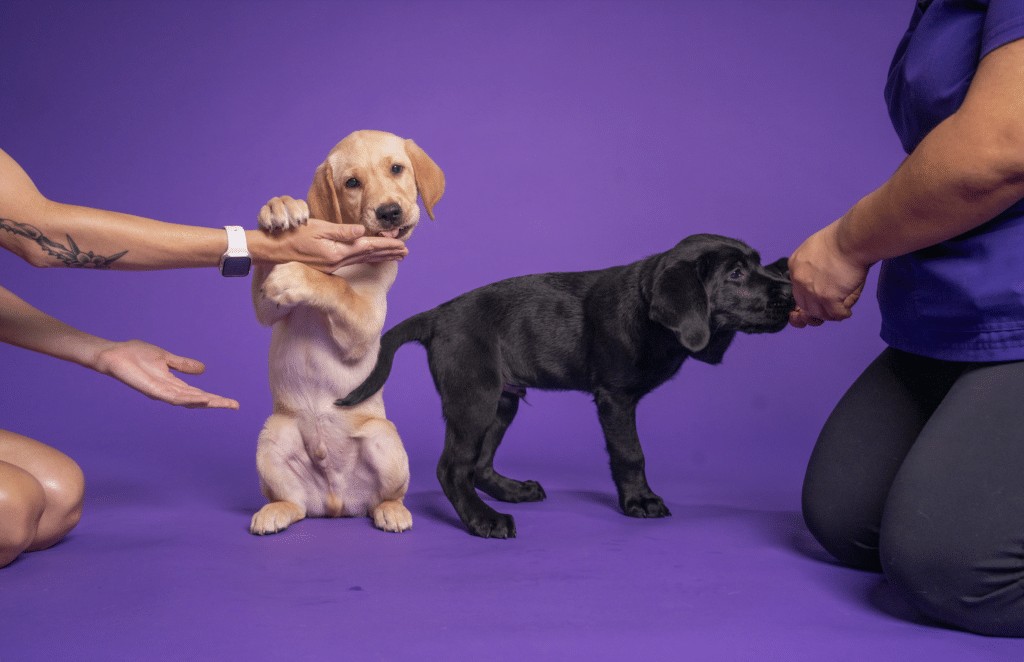
At Dogs Inc, we proudly use positive reinforcement training techniques. Positive reinforcement is the preferred method for training dogs. From the very beginning, when teaching foundational behaviors like the ‘sit’ cue, it’s important to use training treats that your dog finds highly motivating. Start with soft, pea-sized treats—these keep dogs focused, are easy to eat quickly, and help avoid overfeeding. High-value treats, such as bits of cheese, chicken, or steak can be especially effective, while low-value treats may not work in distracting environments. Finding the right treat may require some trial and error to see what your dog finds most motivating.
When teaching a new cue like “sit,” reward your dog immediately and in the correct position to reinforce the behavior you want. Delivering treats too slowly or in the wrong position can confuse your dog about what is being rewarded. Dogs learn by association, so the timing of the reward is crucial—reward the behavior, not the release. Consistent cues and immediate rewards help your dog understand the connection between their actions and the reward. Markers, such as clickers or verbal cues, can help signal to your dog exactly which action earned the reward.
Even if it is only a short training session, end it on a positive note, and ensure everyone in the household uses the same cues for clarity. Why? Because dogs respond to positive reinforcement.
Introduction to Positive Reinforcement Training Methods
Positive reinforcement is a science-based dog training method rooted in operant conditioning. Instead of correcting unwanted behavior, it focuses on rewarding behaviors you want to see repeated. When your dog performs a desired action and immediately receives something valuable—such as a treat, verbal praise, or a toy—they learn through clear association.
This approach builds motivation, strengthens communication, and creates a training experience rooted in trust. Because most dogs are food motivated, training treats are often the most effective reinforcement tool, especially when teaching new cues or working in distracting environments.
As your dog’s behaviors become more reliable, instructors may vary rewards while still maintaining positive reinforcement. The goal is not to remove rewards, but to use them strategically to keep performance strong.
Why Treat Training Works
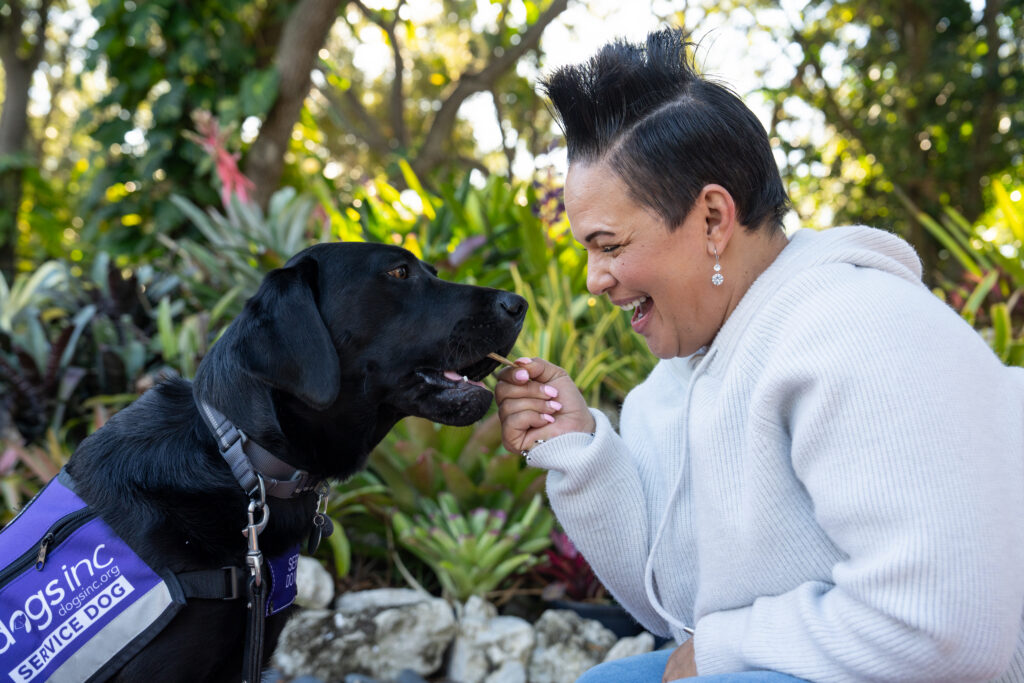
Dogs repeat behaviors that are rewarding. When a puppy sits and immediately earns a treat, they begin to connect the behavior with something positive. That clear communication builds trust, confidence, and reliability. Shaping can be used to teach certain skills by rewarding small steps toward the desired action, gradually guiding your dog to perform the behavior.
Puppy sits? Treat.
Puppy stays? Treat.
Puppy chooses to focus despite distractions? Treat.
When the timing and position of the reward are consistent, your dog understands exactly what is being reinforced. Rewarding dogs in the wrong position can confuse them about what behavior is wanted.
Consistency, repetition, and daily practice help turn those rewarded moments into dependable habits.
Do Dogs Ever Stop Getting Treats?
At Dogs Inc, our dogs continue to work for positive reinforcement throughout their careers. Even highly trained guide and service dogs benefit from reinforcement. Professional dog instructors use a variety of rewards and techniques to maintain strong behaviors and avoid dependency on any single reward. The treat pouch isn’t a crutch. It’s a communication tool.
A varied reward system—including toys, affection, and praise in addition to treats—keeps dogs motivated and engaged. Food rewards help maintain skills, sharpen focus, and reinforce new or challenging cues. However, relying solely on treats can create a dependency, making dogs less responsive without food. To prevent this, instructors incorporate other forms of positive reinforcement into the training routine.
How to Use Treats Effectively

Using treats successfully is about timing and intention.
Reward immediately. The treat should come within seconds of the desired behavior so your dog clearly understands what earned it. If you deliver the treat too slowly, your dog may not associate the reward with the correct behavior.
Tip: Give the treat close to your dog’s face or nose to reinforce the behavior and avoid confusion.
Be consistent. Clear cues and consistent rewards help prevent confusion.
Reward effort and progress. When teaching something new, reinforce small improvements along the way.
Use treats strategically.High-value treats can be especially helpful in distracting environments or when working on more complex skills. Training treats can include regular food, such as kibble, which is beneficial because it is complete and balanced. Monitor calorie intake from treats and adjust meals or feeding accordingly to prevent weight gain.
Tip: Break treats into small, pea-sized pieces to keep training efficient and avoid overfeeding.
Toys, affection, or praise can also be used as alternative rewards for dogs who are motivated by play or attention.
Over time, desired behaviors become more fluent and reliable because they’ve been reinforced consistently, not because the reward disappeared.
A Healthy Tip
 Concerned about calories? Simply set aside a portion of your dog’s daily kibble to use during training sessions. This keeps reinforcement frequent without adding extra food.
