

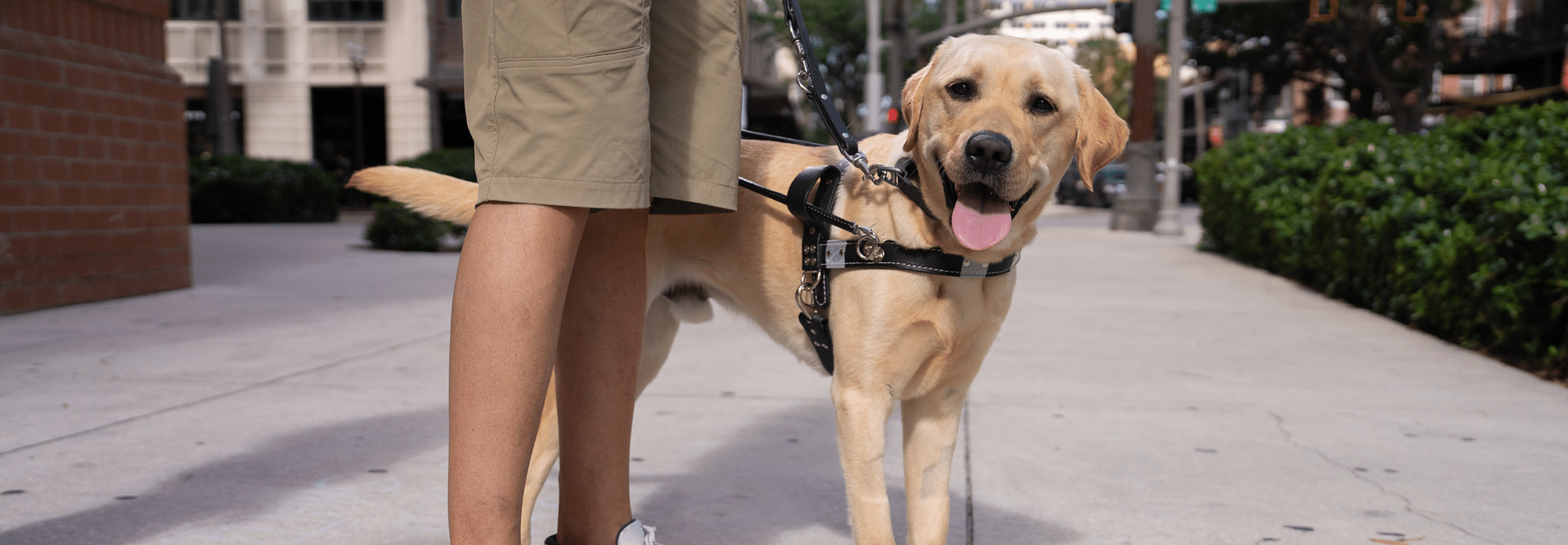
Intelligent Disobedience in Guide Dogs: How Guide Dogs Learn To Prioritize Safety
Most dog training focuses on one goal: obedience.
Sit. Stay. Come.
For most dogs, following a command is exactly what’s expected. But guide dogs are taught something different. In certain situations, they’re trained to do the opposite.
Rather than simply obeying, guide dogs learn to assess their surroundings, make decisions, and prioritize safety. It’s a skill that helps create strong, effective guide dog partnerships built on trust and communication.
What Is Intelligent Disobedience?
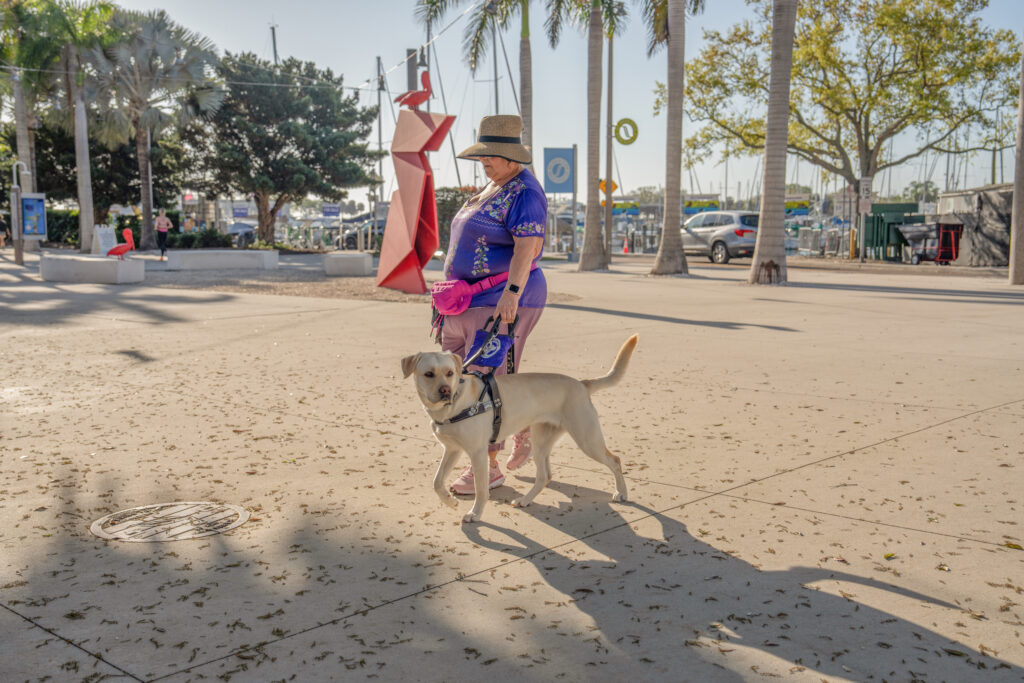
Intelligent disobedience in guide dogs is the ability to intentionally ignore a command when obeying it would put their handler in danger. This remarkable skill is one of the most important aspects of guide dog safety training.
At first glance, that may look like regular disobedience. In reality, it’s the opposite.
A guide dog isn’t refusing to work or ignoring its handler. Instead, the dog is using its training and environmental awareness to determine whether moving forward would keep the person safely out of danger.
For example, someone may give a forward command to cross a street. If a vehicle is approaching, the guide dog is trained to remain still rather than move into danger.
This type of guide dog decision making is one of the most unique and advanced service dog skills. The dog learns that safety always comes first.
Why Guide Dogs Sometimes Need to Say “No”
People who are blind or visually impaired often receive information about their surroundings through hearing, touch, and other senses. However, some hazards can be difficult or impossible to detect.
That’s where a guide dog becomes an additional layer of safety.
Guide dogs may refuse a command when they encounter:
- Oncoming traffic
- Low-hanging branches or signs
- Construction zones
- Blocked sidewalks
- Unexpected obstacles
- Unsafe walking surfaces
In street-crossing situations, people cannot rely on dogs to read traffic lights; instead, they have to judge when it is safe to move based on traffic flow and sound cues. Sometimes, the dog could refuse to step forward if a crossing is unsafe. In these situations, following a handler’s command could create risk. Instead, the dog uses guide dog obstacle avoidance skills to stop, reroute, or communicate that something is wrong.
Understanding why guide dogs sometimes ignore cues begins with understanding their purpose: to help keep their person safe.
How Guide Dogs Learn Intelligent Disobedience
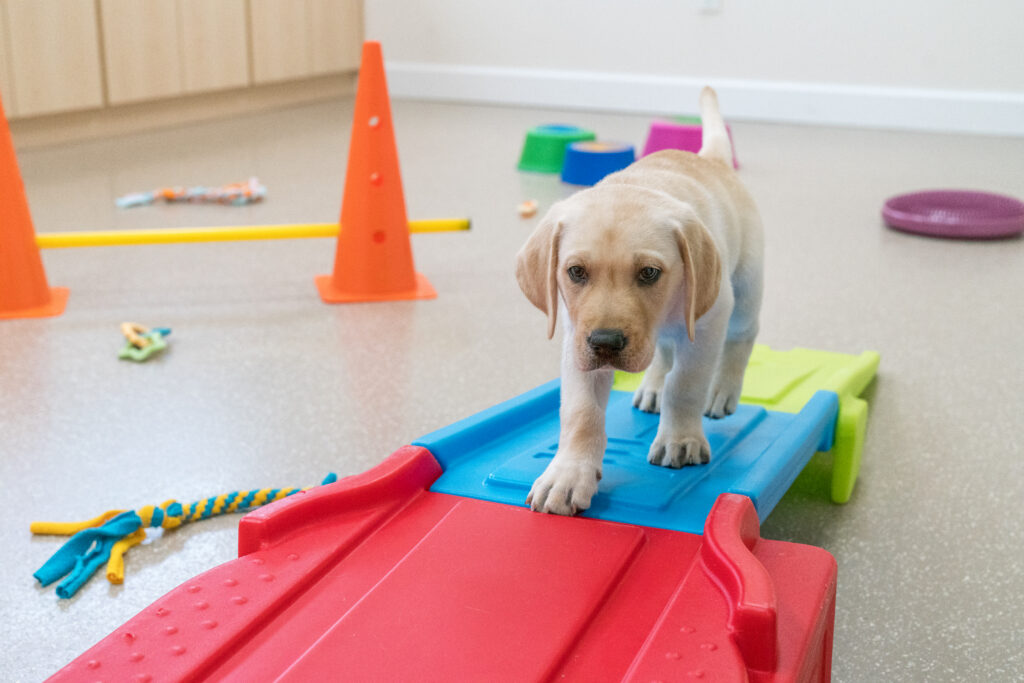
The full training process takes about 2 years on average. From birth, puppies are introduced to various environments and usually spend 12 to 18 months with puppy raisers and in basic training before advanced training begins.
During training, instructors expose dogs to a wide variety of real-world settings and situations. Dogs learn to gather information from their surroundings and evaluate potential hazards.
They are rewarded for making safe decisions, even when those decisions involve refusing a command.
Positive reinforcement plays a critical role throughout the process. Advanced training lasts a minimum of 5 months, and dogs learn that choosing safety leads to positive outcomes.
Over time, guide dogs develop strong problem-solving skills and learn that protecting their handler is more important than simply complying with a command.
This combination of obedience, environmental awareness, and guide dog decision making helps prepare them for life as working guide dogs.
The Role of Trust in a Guide Dog Partnership
Intelligent disobedience only works when there is trust.
A guide dog partnership depends on two individuals working together as a team. Building a strong guide dog team starts with matching that evaluates the handler’s needs, walking pace, and everyday environment so the pair can travel confidently from point to point. Personality traits are considered as well, and a Juno Walk is used to assess compatibility before the match is finalized for long-term success. The handler provides direction about where they want to go, while the guide dog provides information about how to get there safely.
That means those with a guide dog must learn to trust their dog’s judgment.
When a guide dog stops unexpectedly or refuses a command, there’s usually a reason. Through experience, handlers learn to recognize and trust those decisions.
At the same time, guide dogs learn how to communicate important information through their behavior.
Over months and years together, this guide dog and human relationship grows stronger, creating a partnership built on trust, communication, and shared understanding.
Real-World Examples of Intelligent Disobedience
Intelligent disobedience often appears in small moments that can make a big difference.
A guide dog might refuse to cross a street when traffic is approaching, steer around low-hanging branches, dodge signs, construction barriers, or uneven terrain, or even reroute around a blocked sidewalk. In some situations, the dog may choose a safer path altogether rather than follow the most direct route.
These split-second decisions showcase the judgment and navigation skills that make guide dog partnerships so effective.
Why Intelligent Disobedience Is Different From Regular Obedience Training
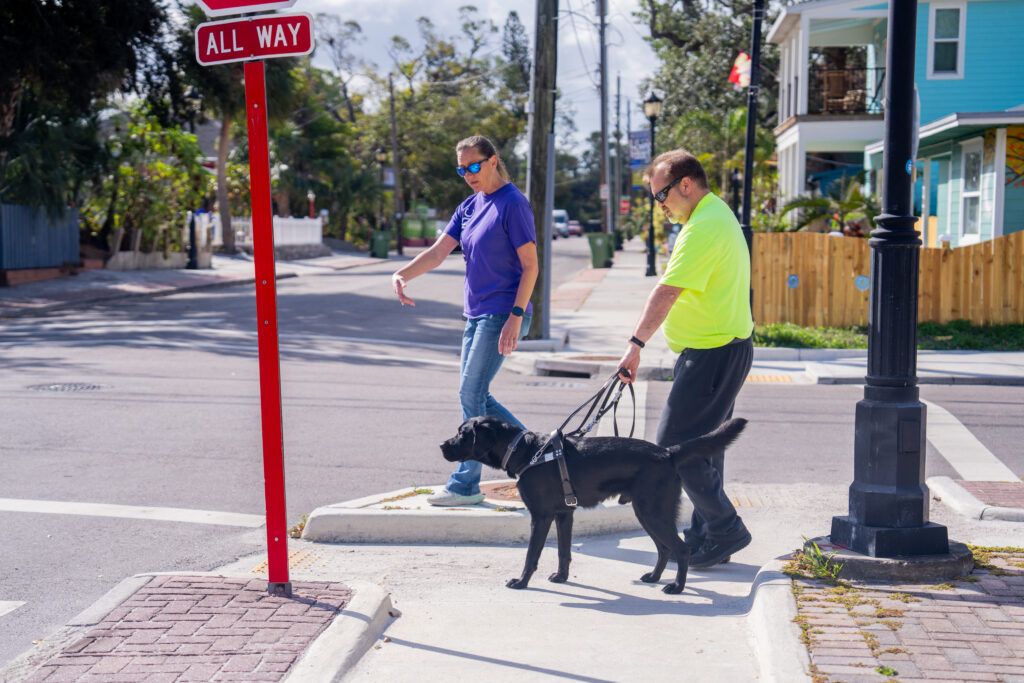
Most pet dogs are rewarded for immediate compliance.
Unlike other types of dog training, guide dogs must balance obedience with independent thinking.
Basic obedience remains crucial, but guide work depends on the dog’s ability to make safety-based decisions that go beyond what is typically expected of a service animal.
They learn to follow cues while also remaining aware of their surroundings. Rather than responding automatically, they continuously evaluate environmental conditions and potential risks.
This requires a level of critical thinking and situational awareness that goes far beyond traditional obedience training.
For that reason, intelligent disobedience is often considered one of the most advanced guide dog skills a working guide dog can learn.
How a Guide Dog Mobility Instructor Evaluates a Guide Dog’s Judgment
Not every dog is comfortable making independent decisions.
Throughout guide dog training, instructors may include a guide dog mobility instructor who evaluates judgment during each increasingly realistic walk.
They look for qualities such as:
- Confidence
- Problem-solving ability
- Environmental awareness
- Consistency
- Reliability
Dogs must demonstrate that they can make safe decisions under pressure while remaining focused and composed.
A guide dog that consistently prioritizes safety and responds appropriately to challenges is demonstrating the judgment needed for a working team, and this evaluation is crucial to long-term success.
Why Intelligent Disobedience Creates Greater Independence
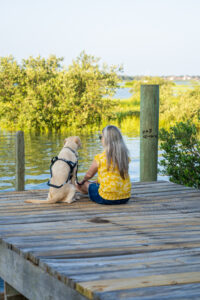 At its heart, intelligent disobedience is about freedom.
Guide dogs help people travel with greater confidence, safety, and independence. This kind of assistance can be life-changing for owners and is often described as transforming lives. Intelligent disobedience can even save lives by helping a person avoid hazards in busy environments.
Knowing that a trusted partner is actively watching for hazards can make navigating the world feel less stressful and more accessible.
While guide dogs cannot replace all mobility skills, their training and judgment help create opportunities for greater independence, confidence, and connection with the world around them.
The Skill That Makes Guide Dogs Exceptional
Intelligent disobedience is one of the most important guide dog skills, and one of the most fascinating.
Guide dogs are trained not only to follow directions, but also to think, assess situations, and prioritize safety when it matters most.
Through trust, communication, and careful decision making, guide dogs become more than mobility partners. They become trusted teammates who help protect and empower the people who depend on them.
It’s this unique combination of training, judgment, and partnership that makes guide dogs truly exceptional.
Learn More About Guide Dogs
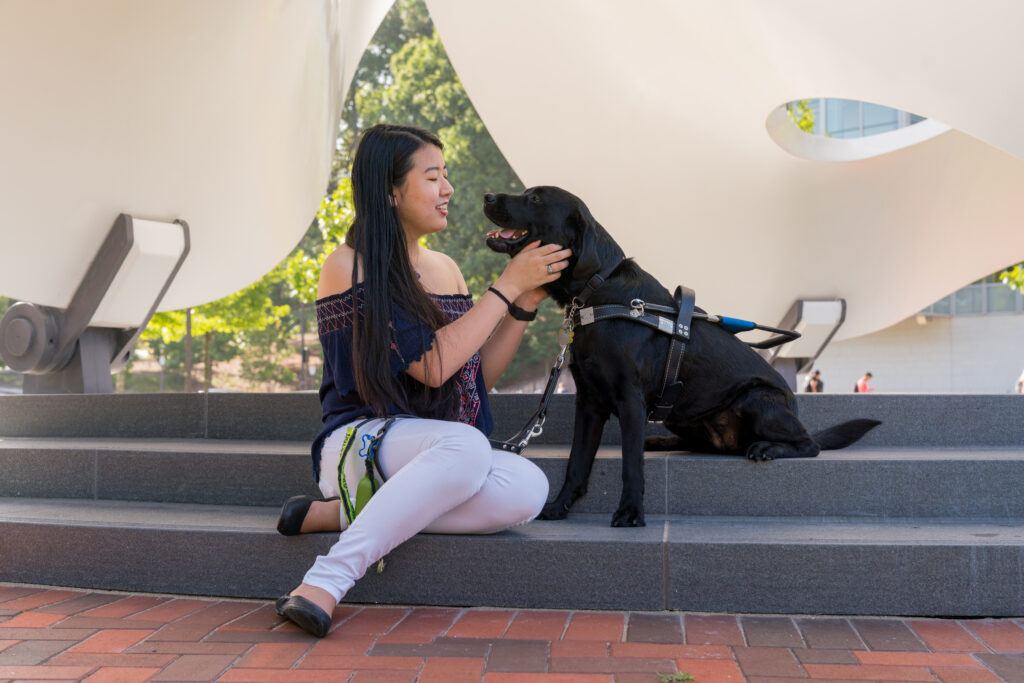
Interested in learning more about how guide dogs are trained and the life-changing partnerships they create?
Explore the guide dog programs at Dogs Inc, follow the journey of future guide dogs in training, or discover how you can support the next generation of guide dog teams through volunteering, puppy raising, or donations.
